Help your team grow without making them dependent on you
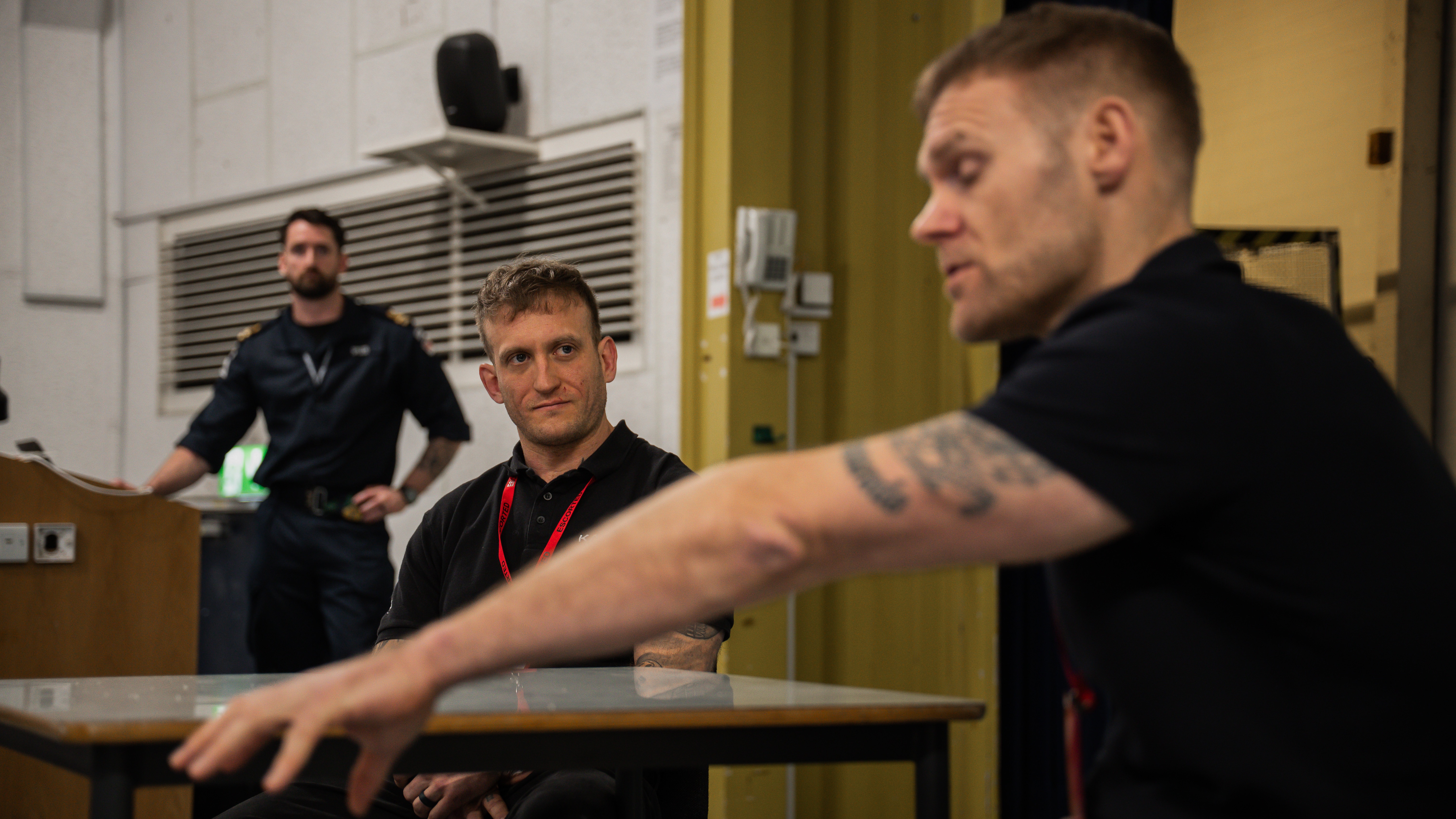
Kaizen Summit facilitators Mark Ormrod, Ben Newton and Liam Speed during a leadership session at HMS Drake, March 2026.
Chris Stokes wants the people he helps to regain the ability to do what matters to them. His conversation with Ben Newton offers a useful question for leaders: does our support leave people more capable of acting for themselves?
Early in his conversation with Ben on Curiosity & Command, physiotherapist Chris Stokes described an ambition that sits awkwardly with the idea of keeping customers coming back. He wants to give people the tools to improve, rather than have them rely on seeing him continually.
That intention is reflected in the name of his business, Return Physiotherapy. Chris explained that he wants people to get back to the things they enjoy. The destination belongs to the person he is helping.
For those of us leading a team, there is a useful question here. When someone comes to us for help, are we leaving them better equipped to handle the next decision?
We can answer the immediate question and still leave the underlying dependence untouched. Developing capability takes more: a shared understanding of the outcome, room to make decisions, access to support and an opportunity to learn from what happens.
Notice what our help is teaching
Consider a team member who brings us a customer problem. We know the account, recognise the issue and can write the reply in a few minutes. Under pressure, taking over may be the right immediate decision. The customer still needs looking after.
But if we write every difficult reply, our colleague has little opportunity to understand the judgement behind it. They see the finished answer. They may never see how we weighed the customer's needs, the commitments already made or the limits of what we could offer.
The next problem arrives, and so do they.
Before deciding that someone lacks initiative, we need to examine our contribution. Have we explained the standard? Do they know which decisions they can make? Have we given them a chance to practise, or have we repeatedly stepped in before they could try?
These questions sit at the heart of how we approach Lead With Ownership. We begin with the conditions we can influence. That includes the habits we have built around our own availability and expertise.
A leader can be generous with their time while still keeping too much judgement to themselves. Sharing the reasoning behind an answer is one way to begin changing that.
Agree what someone should be able to do
During the conversation, Chris kept returning to the individual's goal. What did they want to get back to? The support needed to make sense in relation to that destination.
We can apply the same discipline when developing someone at work. Asking a colleague to become more confident is difficult to act on. Agreeing that they will lead the next customer review, explain the options and recommend a way forward gives both of us something concrete to work towards.
It also makes our teaching more useful. We can identify the information they need, practise the difficult part and decide where support should remain close.
Take a recurring customer complaint. Before handing it over, we might agree that the colleague will establish what happened, recognise the effect on the customer and propose a remedy within an existing policy. Exceptions would come back to a named person before any commitment was made.
Now there is a defined area in which they can exercise judgement. We have also protected the customer from a promise the colleague has no authority to make.
The conversation needs to go both ways. Ask where they feel ready, where they need practice and what is still unclear. Their answer may reveal a missing piece of information that experience has made invisible to us.
Let responsibility grow with capability
Later in the episode, Chris described giving people more responsibility for their own progress while keeping a future check-in available. His account was about physiotherapy. Our leadership interpretation is that increasing independence and continuing support can work together.
In a team, we can make that practical by adjusting our involvement as someone's judgement develops. We might first work through an example together. Next, they propose a response and explain their reasoning. After that, they handle suitable cases within agreed limits, with a review at a sensible point.
Progress should depend on what they can demonstrate and the risk involved. A sensitive customer issue, a safety decision or an unfamiliar situation may need closer supervision. Keeping that support in place is part of our responsibility.
We also need to be clear about what should bring us back into the conversation. An agreed spending limit, a change in scope or an emerging risk can all provide a useful boundary. Without that clarity, a colleague may either seek permission for everything or make a commitment they should have checked.
Our response when they ask for help matters too. If questions are met with irritation, we make it harder to hear about uncertainty early. We can welcome the question, work through the decision and identify what would help them handle a similar situation next time.
Review the judgement as well as the result
Once the work is done, it is tempting to look at the outcome and move on. A useful review also asks how the person reached it.
What information did they use? What did they notice? Where were they uncertain? What would they change if the same situation arose again?
Those answers help us decide what support is needed next. A good result may conceal a weak assumption. A disappointing result may come from a sensible decision made with incomplete information. Reviewing the reasoning gives us more to work with than approval or criticism alone.
We should examine our part too. If we left an important boundary unstated, we need to put that right. If we asked someone to own an outcome without the authority to act, we need to resolve that mismatch before expecting a different result.
Try this with one recurring decision this week. Agree who owns it, what a good outcome means, where the limits sit and when you will review it together. At the review, ask what the person can now do with less help and what they still need from you.
Chris's account offers a generous way to think about expertise. The person receiving our help has things they want to do beyond the time they spend with us. Our work should prepare them for that.
We can remain available, interested and accountable while allowing someone else to grow. Over time, the quality of our support should become visible in the decisions they are able to make for themselves.
