How Do Leaders Protect Purpose, Identity and Energy Before Burnout?
Leaders reduce burnout risk by separating identity from role, choosing purpose over approval, protecting routines and setting boundaries before pressure peaks. Structure helps: define why the work matters, use focused time blocks, write unfinished tasks down, protect sleep and decide what will not receive your time.
By Ben Newton, co-founder of Kaizen Summit and Echelon Front trained leadership practitioner.
Work-related pressure carries a measurable cost. The Health and Safety Executive estimated that 964,000 workers experienced work-related stress, depression or anxiety in Great Britain during 2024/25. Those cases accounted for 22.1 million working days lost.
The World Health Organization classifies burnout as an occupational phenomenon caused by chronic workplace stress that has not been managed successfully. Its three dimensions are exhaustion, increased mental distance or cynicism, and reduced professional efficacy.
Those numbers describe the scale. They do not explain what pressure feels like inside one person's decisions.
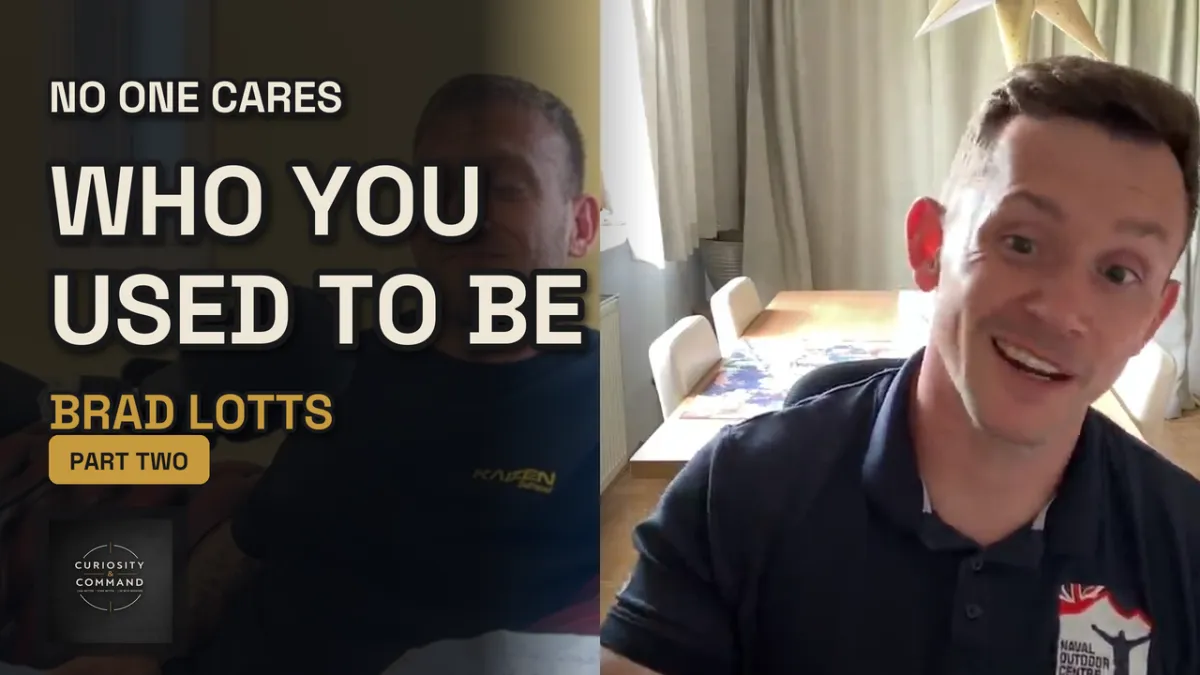
Brad Lotts offered a more useful starting point during Part Two of his Curiosity & Command conversation with me. He spoke about approval, identity, obsession, boundaries and the habits that help him protect his energy.
Why does external approval stop working?
External approval can create effort because nobody wants to look weak or disappoint the group. Its power fades when the audience changes, the praise stops or motivation drops. Purpose gives the work a reason that remains meaningful when nobody is watching and the task becomes difficult.
Brad described how fear of going home and being seen as a failure helped him persist through Royal Marines training. It worked for a time.
The problem appears when other people's judgement becomes the main source of direction. Your decisions begin serving an audience that may leave your life in a few years.
Purpose asks a different set of questions:
- What will this work develop in me?
- Who benefits if I do it well?
- Does this support the person, parent, partner or leader I want to become?
- Would I still choose it without public credit?
Approval and purpose can exist together. The intention determines which one leads.
What happens when your role becomes your identity?
A professional role can provide meaning, status and belonging. It becomes fragile when it contains the whole identity. Injury, redundancy, retirement or a move into a new environment can then feel like the loss of the person, rather than a change in the work.
Brad learned this after leaving the military for a year and working with children.
He entered the room as an ex-Royal Marine and physical training instructor. The children gave him no automatic status. They cared about the value he could provide in front of them.
That experience stripped the introduction back to the person.
Leaders can test identity before a forced transition:
- Write down the three labels you use most often.
- Ask what remains if each one disappears.
- List the qualities your family and closest friends would name.
- Identify the value you can create without relying on your title.
This protects more than career resilience. It also improves leadership now. A person who does not need the role to defend their worth can listen, adapt and admit when the old approach has stopped working.
How can a leader tell when focused effort is becoming harmful?
Focused effort becomes harmful when the person loses control of where it ends. Warning signs include work entering family time, difficulty switching off, disrupted sleep, reduced enjoyment and constant mental attention. The aim is early recognition, followed by a deliberate change in structure, workload or support.
Brad described obsession as a period of intense motivation that can accelerate progress. He also named its edge. The risk grows when the work moves into every part of life and recovery disappears.
The HSE's 2025 report identifies workload pressure, including tight deadlines and too much work, alongside weak managerial support and organisational change, as prominent causes of work-related stress.
Self-awareness has to become visible action. Leaders should watch for:
- sleep disruption
- irritability or cynicism
- work replacing recovery
- reduced ability to concentrate
- family time becoming a default overflow area
- effort continuing after enjoyment and meaning have gone
These signals deserve attention before performance collapses.
Which structures help protect energy under pressure?
Useful structures reduce the number of open decisions a person carries. A written task list can close the working day. Time blocks protect focused work. A morning routine secures food, water and physical activity. Clear boundaries prevent every request from entering family time, recovery and sleep.
Brad's advice was practical:
- Write unfinished tasks down before leaving work.
- Protect the first part of the morning.
- Use focused work blocks followed by short breaks.
- Keep work out of the evening where possible.
- Learn to decline requests that do not deserve the time.
His sharpest line was: "Every yes takes time from somewhere."
That is the boundary test.
Before saying yes, name where the time will come from. If the answer is sleep, health or family, the cost is already visible.
What should leaders do this week?
Choose one pressure point and install one visible control. Write the open tasks down, protect a morning block, set a finish time or decline work that belongs elsewhere. Small structures matter because they turn an intention into a repeatable action that still works when motivation is low.
Use this short audit:
| Pressure point | Question | Control |
| Approval | Would I still choose this without public credit? | Write the purpose in one sentence. |
| Identity | Who am I without the role? | Name three qualities outside work. |
| Open tasks | What is still running in my head? | Write it down before leaving work. |
| Attention | When can I work without interruption? | Protect one focused block. |
| Boundaries | Where will the time for this request come from? | Decline or renegotiate the request. |
Leadership under pressure starts with an accurate view of your own behaviour. Complete the Kaizen Leadership Self-Assessment to identify the area that deserves attention first.
Continue with Take Control of the Situation and Discipline Over Motivation.
Frequently asked questions
Is burnout a medical diagnosis?
The World Health Organization classifies burnout as an occupational phenomenon in ICD-11. It describes exhaustion, increased mental distance or cynicism, and reduced professional efficacy caused by chronic workplace stress that has not been managed successfully.
Can purpose prevent burnout?
Purpose can support persistence and decision-making, but it does not remove excessive workload, poor working conditions or the need for recovery. Leaders still need clear boundaries, suitable support and changes to work when pressure has become harmful.
What is a brain dump?
A brain dump is the simple act of writing down unfinished tasks and concerns. It gives each item a place outside working memory and creates a clear list for the next working period.
How do I set a boundary when the work matters?
Name the cost of the request, decide what remains protected and offer a realistic alternative. A boundary can change the deadline, reduce the scope, move ownership or decline the work.
Where can someone seek support?
Anyone in the UK can contact Samaritans on 116 123. UK veterans can also seek specialist mental health support through NHS Op COURAGE. If there is an immediate risk to life, call 999.
Sources
- Health and Safety Executive: work-related stress, depression or anxiety statistics, 2025
- Health and Safety Executive: working days lost in Great Britain
- Health and Safety Executive: research on work-related ill health
- World Health Organization: burnout as an occupational phenomenon
- Curiosity & Command transcript: Brad Lotts, Part Two, recorded 21 July 2026
SEO package
- Primary keyword: leadership burnout prevention
- Secondary keywords: identity after military service, purpose versus approval, leadership boundaries, work stress structure
- Meta title: How Leaders Protect Purpose and Energy Before Burnout
- Meta description: Brad Lotts shares practical lessons on purpose, identity, routines and boundaries, supported by current HSE and WHO evidence on work-related pressure.
- Cover image alt text: Brad Lotts discussing identity, purpose and burnout on the Curiosity & Command podcast
