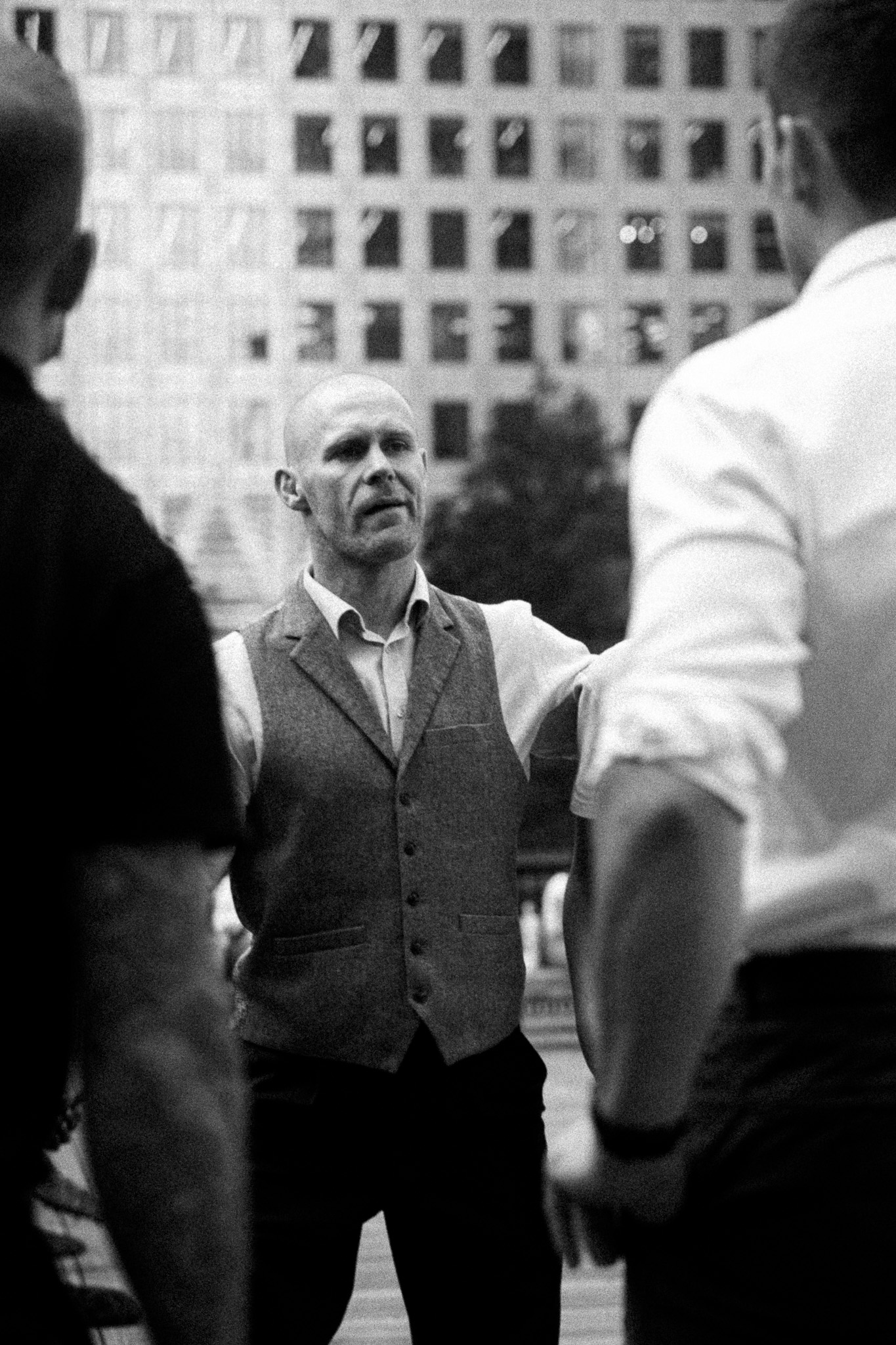
Train Together: Stay Together
Train Together: Stay Together
A team does not become effective by chance.
It is built.
Through pressure. Through challenge. Through shared understanding. And through deliberate training.
Every team operates in an environment that is rarely simple or linear. Priorities shift. Problems appear without warning. Pressure increases when timelines tighten or budgets move. In these moments, performance is not determined by talent alone. It is determined by how well the team works together.
Strong teams do not wait to be told what to do. They align quickly. They communicate clearly. They support each other. They adapt, often autonomously.
That level of performance requires training.
Without it, teams drift and friction takes hold.
Ego begins to surface. People protect their own position. Departments compete for time and resources. Miscommunication increases. Alignment breaks down. Even capable individuals begin to underperform because the team is no longer moving in the same direction.
Left unchecked, this leads to frustration. Trust erodes. Respect declines. Culture suffers. And eventually, the mission is put at risk.
This is a leadership problem.
And like all leadership problems, it requires ownership.
Leaders are responsible for building teams that can execute under pressure. That means more than setting direction. It means developing people. It means creating an environment where individuals understand the mission, believe in it, and know how to contribute.
Clarity is essential.
People need to know what good performance looks like. They need to understand what is expected of them and how their role connects to the wider objective. Without that clarity, effort becomes scattered and inconsistent.
Training provides that clarity.
It gives teams a shared language. A shared standard. A shared approach to solving problems.
More importantly, it builds belief.
When people train together, they begin to trust each other. They understand each other’s strengths and weaknesses. They learn how to communicate more effectively. They develop confidence in the team’s ability to handle challenges.
That confidence changes behaviour.
Teams stop competing internally. They start supporting each other. They focus on the mission rather than individual success. They begin to operate as a unit.
There are many ways to train a team.
Workshops. Conferences. Practical exercises. Ongoing development programmes.
The format matters less than the intent.
Training must be consistent. It must be structured. And it must lead to application.
Learning without action has little value.
One effective approach is to introduce a structured cycle of learning, reflection, discussion, and application. This allows teams to absorb new concepts, consider how they apply to their environment, align as a group, and then take action.
This process creates momentum.
Instead of overwhelming people with information, it focuses on one concept at a time. It gives space to think. It encourages discussion. And it reinforces learning through action.
Over time, this builds capability.
Teams begin to take ownership of problems. They communicate more directly. They align faster. They execute with greater consistency.
This is where training has real impact.
It moves from theory to behaviour.
It becomes part of how the team operates on a daily basis.
Consistency is what drives results.
Short bursts of motivation do not build strong teams. Discipline does.
Regular training. Regular discussion. Regular application.
That is how standards are established and maintained.
It also creates accountability.
When a team is aligned on principles and expectations, it becomes easier to hold each other to those standards. Performance improves because everyone understands what right looks like.
Progress should be measured.
Not just in output, but in behaviour. Are conversations improving? Is communication clearer? Are problems being solved faster? Is ownership increasing across the team?
These are the indicators that training is working.
Feedback matters here.
Leaders need to listen. Adjust. Refine the approach. Training is not static. It evolves as the team develops.
But the direction remains the same.
Build a team that can think clearly. Communicate effectively. And execute together.
That is the outcome.
Creating a highly effective team is not quick.
It takes time. It takes effort. It takes consistent leadership.
But the return is significant.
A trained team is more resilient. More adaptable. More aligned.
They do not break under pressure. They respond.
They do not wait for direction. They take initiative.
They do not work as individuals. They operate as a team.
That is the difference.
And that difference is created through training.
Deliberate. Consistent. Focused training.
Because effective teams are not found.
They are built.
